Books I often recommend to leaders
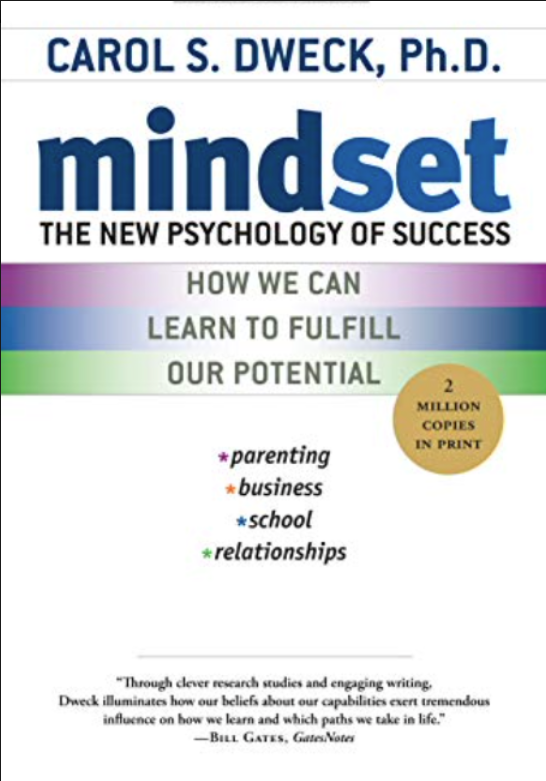
Mindset: The New Psychology of Success
By Carol Dweck
After decades of research, world-renowned Stanford University psychologist Carol S. Dweck, Ph.D., discovered a simple but groundbreaking idea: the power of mindset. In this brilliant book, she shows how success in school, work, sports, the arts, and almost every area of human endeavor can be dramatically influenced by how we think about our talents and abilities. People with a fixed mindset—those who believe that abilities are fixed—are less likely to flourish than those with a growth mindset—those who believe that abilities can be developed. Mindset reveals how great parents, teachers, managers, and athletes can put this idea to use to foster outstanding accomplishment.
In this edition, Dweck offers new insights into her now famous and broadly embraced concept. She introduces a phenomenon she calls false growth mindset and guides people toward adopting a deeper, truer growth mindset. She also expands the mindset concept beyond the individual, applying it to the cultures of groups and organizations. With the right mindset, you can motivate those you lead, teach, and love—to transform their lives and your own.
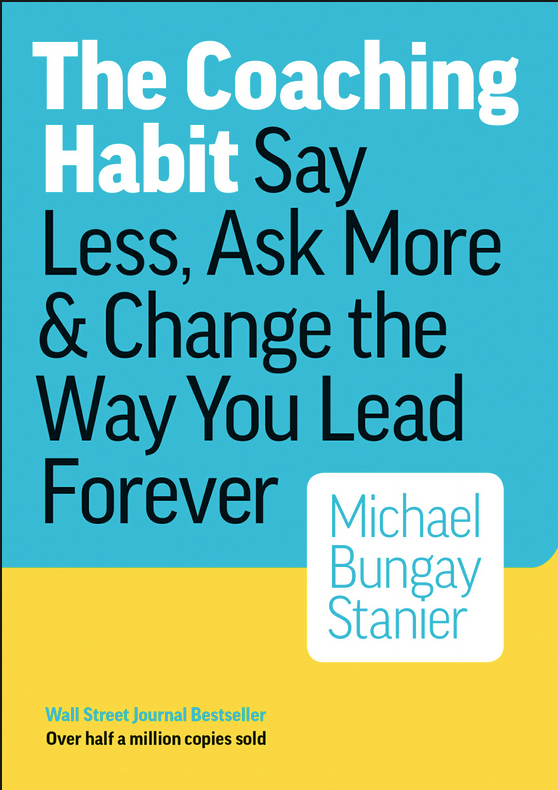
The Coaching Habit
By Michael Bungay Stanier
In The Coaching Habit, coaching becomes a regular, informal part of your day so managers and their teams can work less hard and have more impact.
Drawing on years of experience training more than 10,000 busy managers from around the globe in practical, everyday coaching skills, Bungay Stanier reveals how to unlock your peoples' potential. He unpacks sevenessential coaching questions to demonstrate how--by saying less and asking more--you can develop coaching methods that produce great results.
- Get straight to the point in any conversation with The Kickstart Question
- Stay on track during any interaction with The Awe Question
- Save hours of time for yourself with The Lazy Question, and hours of time for others with The Strategic Question
- Get to the heart of any interpersonal or external challenge with The Focus Question and The Foundation Question
- Ensure others find your coaching as beneficial as you do with The Learning Question
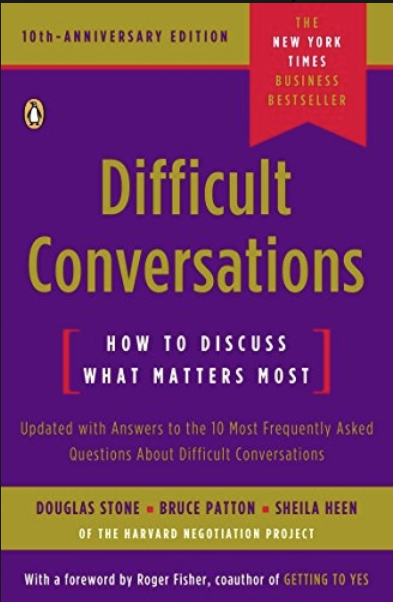
Difficult Conversations - How to Discuss What Matters Most
By Douglas Stone, Bruce Patton, Sheila Heen
We often attempt or avoid difficult conversations -whether dealing with an underperforming employee, disagreeing with a spouse, or negotiating with a client. From the Harvard Negotiation Project, Difficult Conversations provides a step-by-step approach to having those tough conversations with less stress and more success. It shows how you can learn to:
· Decipher the underlying structure of every difficult conversation
· Start a conversation without defensiveness
· Listen for the meaning of what is not said
· Stay balanced in the face of attacks and accusations
· Move from emotion to productive problem solving
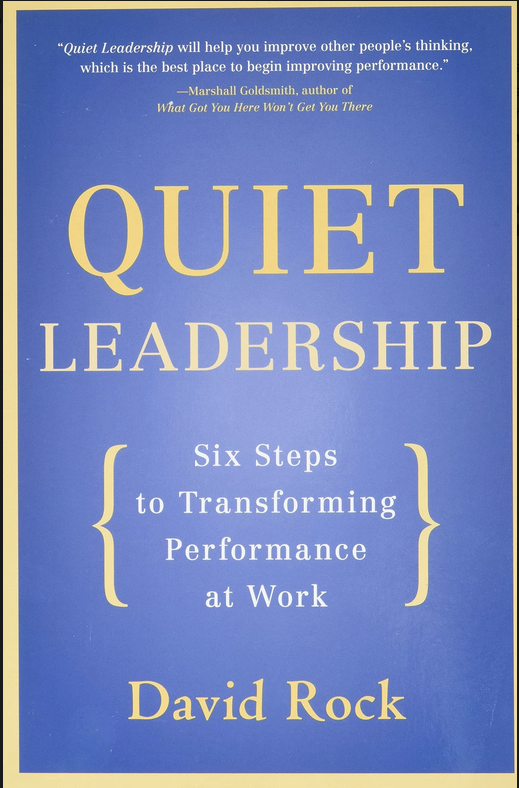
Quiet Leadership: Six Steps to Transforming Performance at Work
By David Rock
Improving the performance of your employees involves one of the hardest challenges in the known universe: changing the way they think. In constant demand as a coach, speaker, and consultant to companies around the world, David Rock has proven that the secret to leading people (and living and working with them) is found in the space between their ears. "If people are being paid to think," he writes, "isn't it time the business world found out what the thing doing the work, the brain, is all about? " Supported by the latest groundbreaking research, Quiet Leadership provides a brain-based approach that will help busy leaders, executives, and managers improve their own and their colleagues' performance. Rock offers a practical, six-step guide to making permanent workplace performance change by unleashing higher productivity, new levels of morale, and greater job satisfaction.
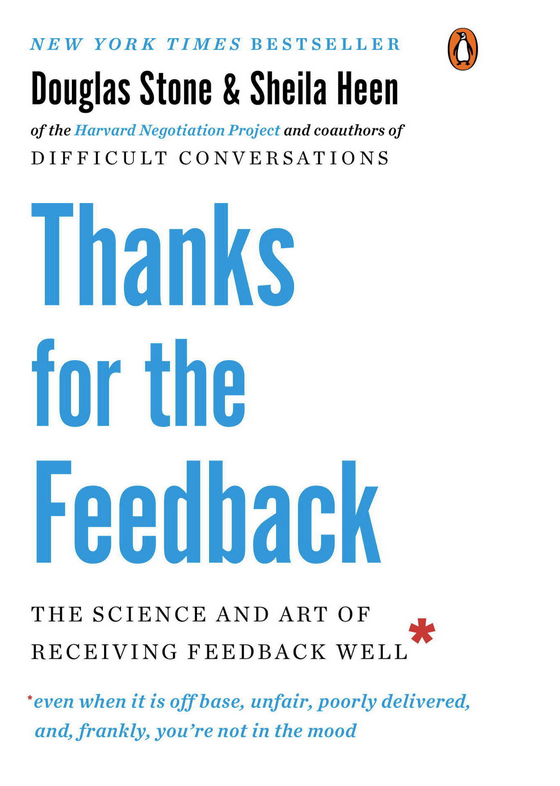
Thanks for the Feedback
By Douglas Stone, Sheila Heen
We swim in an ocean of feedback. Bosses, colleagues, customers—but also family, friends, and in-laws—they all have “suggestions” for our performance, parenting, or appearance. We know that feedback is essential for healthy relationships and professional development—but we dread it and often dismiss it.
That’s because receiving feedback sits at the junction of two conflicting human desires. We do want to learn and grow. And we also want to be accepted just as we are right now. Thanks for the Feedback is the first book to address this tension head on. It explains why getting feedback is so crucial yet so challenging, and offers a powerful framework to help us take on life’s blizzard of off-hand comments, annual evaluations, and unsolicited advice with curiosity and grace.
The business world spends billions of dollars and millions of hours each year teaching people how to give feedback more effectively. Stone and Heen argue that we’ve got it backwards and show us why the smart money is on educating receivers— in the workplace and in personal relationships as well.
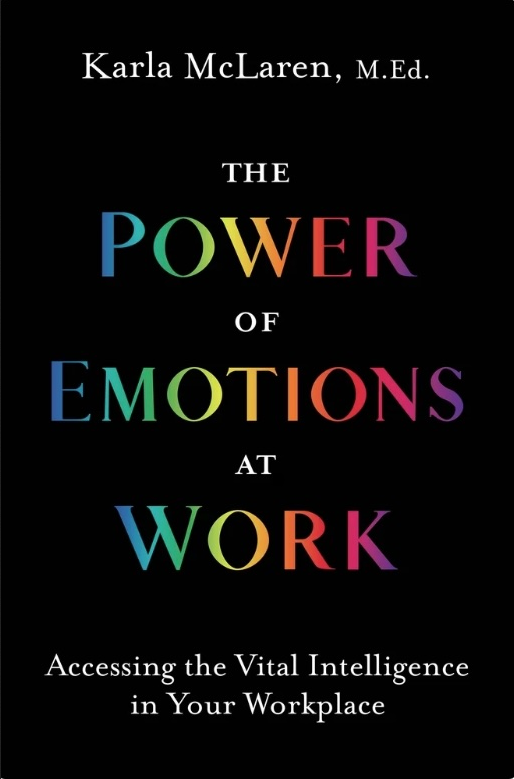
The Power of Emotions at Work: Accessing the Vital Intelligence in Your Workplace
By Karla McLaren
We've all been taught that we must suppress or avoid emotions at work, but this inevitably leads to a loss in productivity, diminished creativity, and crushing job dissatisfaction. Research shows 85 percent of us avoid communicating crucial workplace problems upward, and many of us who are employed are actively looking for a different job. What's going on?
"The foundational problem is that we threw emotions out of the workplace, when in fact, emotions contain the information we need to make our workplaces work," says Karla McLaren. Now this renowned researcher shares her insights on the skills we most need--and are most often absent in the business world - for healthy, functional, and sustainable workplaces.
With The Power of Emotions at Work, McLaren teaches communication and empathy skills to workers at all levels, including:
How to co-create a healthy and well-balanced social environment that benefits all workers in any type of organization
How to recognize your primary emotional role - and the roles of others
How to support people in your organization who perform the most "emotional labor"
Where to find authentic motivation and engagement in your job
How to go from an "unintentional community" to a place of genuine belonging, and much more
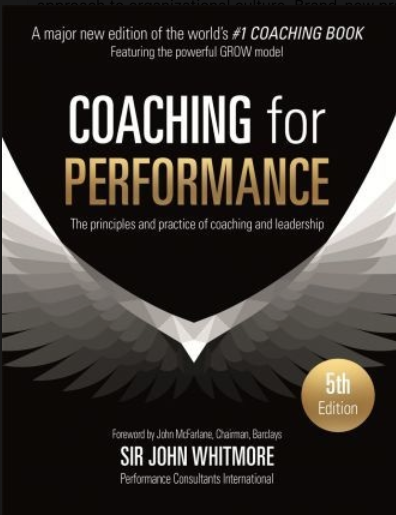
Coaching for Performance: GROWing Human Potential and Purpose
By Sir John Whitmore
An international bestseller, featuring the influential GROW model, this book is the founding text of the coaching profession. It explains why enabling people to bring the best out of themselves is the key to driving productivity, growth, and engagement. A meaningful coaching culture has the potential to transform the relationship between organizations and employees and to put both on the path to long-term success.
Written by Sir John Whitmore, the pioneer of coaching, and Performance Consultants, the global market leaders in performance coaching, this extensively revised and extended edition will revolutionize the traditional approach to organizational culture. Brand-new practical exercises, corporate examples, coaching dialogues, and a glossary strengthen the learning process, whilst a critical new chapter demonstrates how to measure the benefits of coaching as a return on investment, ensuring this landmark new edition will remain at the forefront of professional coaching and leadership development.